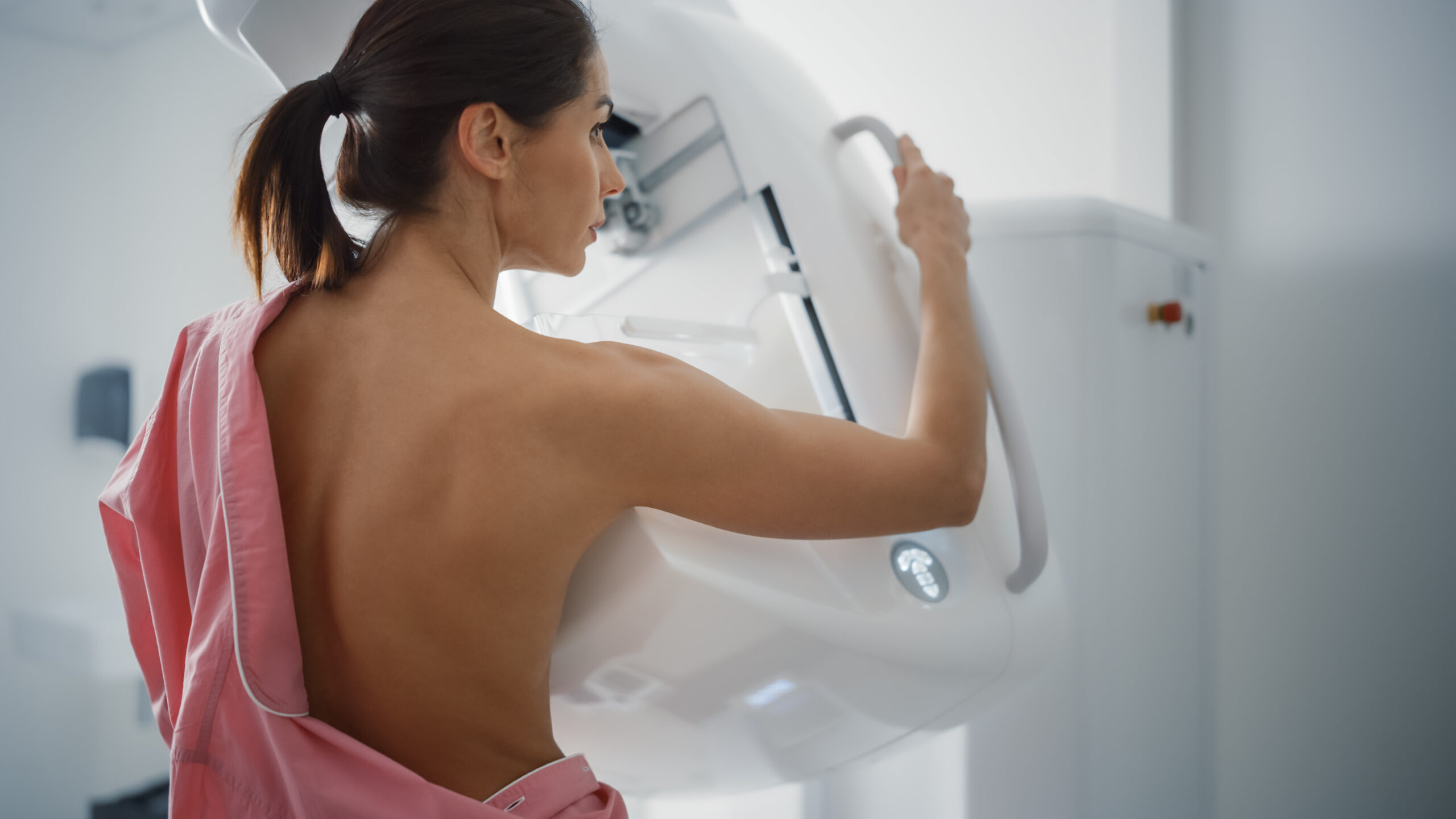
DIGITIAL MAMOGRAPHY
WHAT IS A MAMMOGRAM?
“Mammography Early Detection – Imaging of the breasts for early detection and diagnosis of breast cancer.
- It is a procedure where a low dose x-ray system is used to examine breasts.
- The procedure is used for early detection and diagnosis of breast cancer and other diseases of the breasts in asymptomatic women, as well as in women experiencing symptoms and abnormalities such as lumps, pain or a nipple discharge.
- This procedure can also be done on male patients.
Consider this:
- During a mammogram specialized equipment uses a low dose of radiation to obtain images of your breast to evaluate for abnormalities or disease.
- A screening Mammogram would be a pro-active approach for early detection of breast disease without having any symptoms. Screening mammograms are usually done for women 45 years or older, or those with a history of cancer in the family would have screening mammograms from an age of 10 years younger than the age of when a relative was diagnosed at.
- A Diagnostic Mammogram would be done when you(the patient) are experiencing symptoms or concerns such as a lump, pain, skin dimpling or nipple discharge.
- Mammograms are currently one of the most successful tools for early detection of breast disease and can also be done on male patients.
HOW TO PREPARE
- It is preferrable to have a referral note from your doctor for the mammogram. Most medical schemes pay for an annual mammogram from a separate screening benefit and do not require a referral letter.
- You do not require pre-authorisation for this procedure unless it is part of your scheme rules.
- The account will be submitted to your medical aid, but you remain responsible for any shortfalls or non-payment by the medical aid.
- Private patients are expected to pay for the procedure on the day of the procedure
- If you are on calcium supplements, you should not take it for 24 hours leading to the appointment as this may affect the results.
- You will have to complete a questionnaire relevant to the procedure. Please do so as honestly as possible.
- Even though the procedure uses low dose radiation, you should not have the procedure if you are pregnant.
WHAT TO EXPECT
- You will be asked to change into a procedure gown.
- You will be positioned on the procedure table for the various parts the test is conducted over including your spine and hip. Sometimes the forearm may also be scanned when more information is required due to previous surgeries over your spine or hip(s)
- Routinely 2 views per breast is done, but additional images may be done if necessary.
- Immediately after your mammogram, the radiologist will determine whether you need to have a breast ultrasound performed as well. This is done at no additional cost and aids the radiologist in characterising any finding seen at mammography further.
- The machine has an arm that moves over the procedure table to obtain images.
- Please maintain the position you are placed in.
- The test usually takes 15-20 minutes
- The results will be ready within an hour of your completion of the procedure and your doctor will discuss the results with you.
- If a suspicious is then seen, the radiologist will discuss the option of performing an ultrasound guided breast biopsy